Taking care of braces means brushing thoroughly around every bracket and wire, flossing daily, choosing braces-friendly foods, and keeping up with dental and orthodontic appointments. A consistent routine helps remove plaque, protect tooth enamel, keep gums healthy, and reduce the risk of broken brackets during treatment.
Braces create extra spaces where food particles and plaque can collect, so cleaning requires more attention than usual. Whether you have traditional metal braces or clear braces, the goal is the same: keep your teeth and gums healthy while your teeth move into better alignment.
Why Is Braces Care Important?
Proper braces care helps prevent cavities, gum inflammation, bad breath, and white marks on teeth. Food and plaque can collect around brackets and beneath wires, making some tooth surfaces harder to clean.
If plaque remains on the teeth, acids produced by bacteria can weaken the enamel. During orthodontic treatment, this may lead to permanent white spots around brackets or increase the risk of tooth decay. Inflamed gums can also become swollen, tender, or more likely to bleed.
A good oral hygiene routine supports your dental health throughout treatment. If you want to understand the broader benefits of orthodontic treatment, read about how braces treatment can improve your smile.
How to Brush Your Teeth With Braces
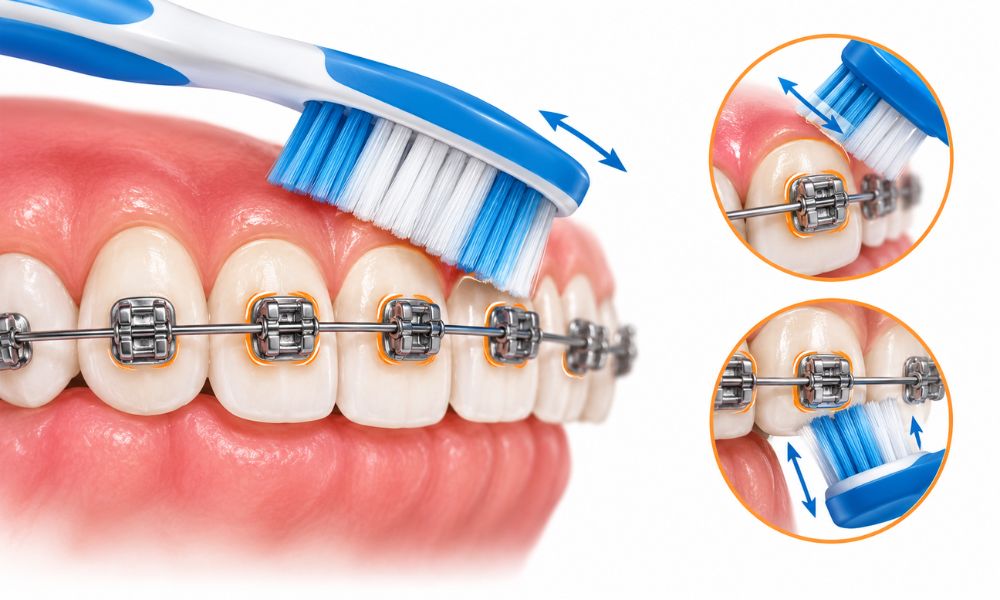
Brush your teeth for about two minutes after meals when possible and always before bed, using a soft-bristled toothbrush and fluoride toothpaste. Clean above and below the brackets, along the gumline, and around the back teeth to remove plaque and trapped food.
Step-by-step brushing technique
- Rinse first. Swish water around your mouth to loosen food particles caught between brackets and wires.
- Brush above the brackets. Angle your toothbrush toward the gumline and gently clean the tooth surfaces above the brackets.
- Brush below the brackets. Tilt the brush upward to reach the tooth surfaces beneath the wire and around the lower edges of the brackets.
- Clean each bracket. Use small, gentle circular movements rather than scrubbing aggressively.
- Brush the chewing surfaces. Clean the tops of your back teeth and the inner surfaces of all your teeth.
- Finish along the gumline. Gently clean where the teeth meet the gums, then spit out the toothpaste. Follow your dental professional’s advice about rinsing after brushing.
Take your time. Rushing can leave plaque around the edges of brackets, especially near the gumline and between teeth.
Is a regular toothbrush good enough for braces?
Yes. A regular soft-bristled toothbrush can clean teeth with braces when you use the right technique. An electric toothbrush is another option if it helps you clean more thoroughly.
The important thing is to reach all tooth surfaces without damaging your gums or applying excessive pressure to your braces. Replace your toothbrush or brush head when the bristles become frayed.
For more practical advice about choosing a brush, see using a regular toothbrush after getting braces.
How to Floss With Braces
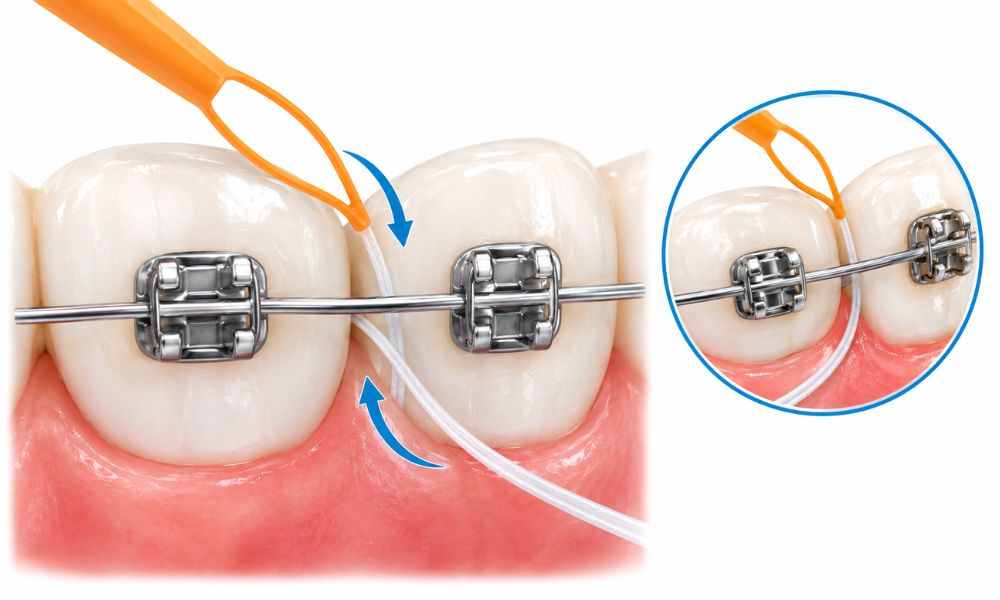
Floss at least once a day to remove plaque and food particles from between your teeth and beneath the gumline. A toothbrush cannot adequately clean these tight spaces, even when you brush carefully around every bracket.
Flossing with braces can take extra time because the wire blocks direct access between the teeth. These tools can make the process easier:
- Floss threader: Helps guide regular dental floss underneath the archwire.
- Orthodontic floss: Some products have a stiffened end that makes threading easier.
- Interdental brush: Helps remove debris around brackets and in suitable spaces between teeth. It does not replace flossing between every tooth.
- Water flosser: Uses a stream of water to flush out food particles and can be a useful addition to brushing and flossing.
How to floss with braces step by step
- Carefully guide the floss underneath the archwire.
- Move the floss gently between two teeth without snapping it into the gums.
- Curve the floss around one tooth and slide it gently beneath the gumline.
- Repeat against the neighboring tooth surface.
- Remove the floss carefully, then move to the next space.
- Continue until you have cleaned between all your teeth.
If threading floss is difficult, ask your orthodontic team to demonstrate a technique or recommend a suitable tool. Consistency is more important than speed.
How to Clean Braces Properly
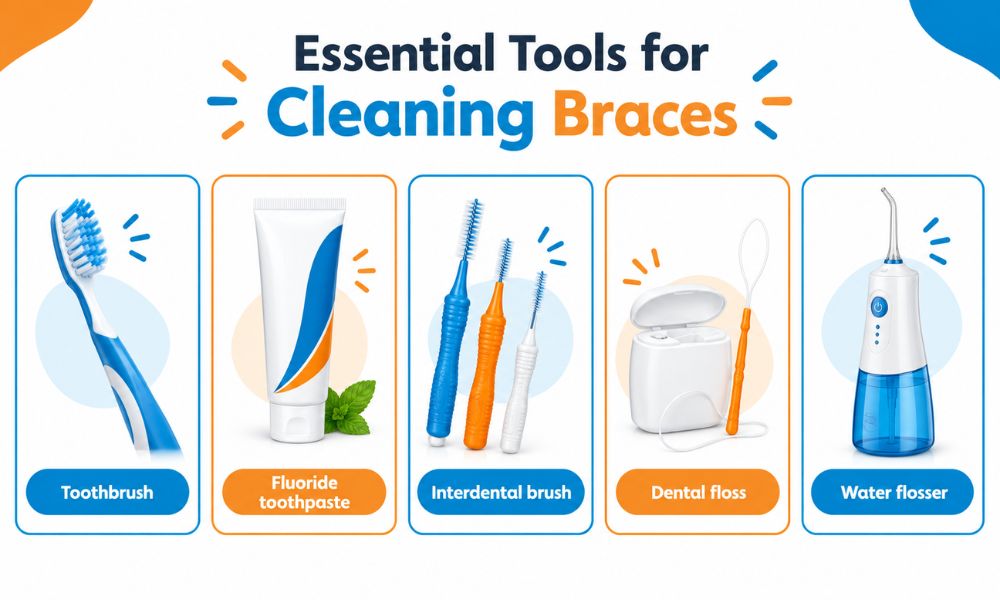
To clean braces properly, brush around the brackets and wires, floss between your teeth, and use an interdental brush to reach areas your toothbrush may miss. Rinsing with water after meals can help loosen food debris when you cannot brush immediately.
A useful braces-cleaning routine includes:
- Soft-bristled toothbrush: Cleans the tooth surfaces around brackets and along the gumline.
- Fluoride toothpaste: Helps strengthen enamel and protect against tooth decay.
- Interdental brush: Reaches around wires and bracket edges where food may become trapped.
- Dental floss: Removes plaque between teeth and beneath the gumline.
- Fluoride mouth rinse: May provide additional protection for people who need it, based on their dentist’s or orthodontist’s advice.
A water flosser can supplement your routine, but do not rely on it as a substitute for brushing. Choose tools that fit comfortably around your appliance and follow the instructions provided by your orthodontic team.
You can also rinse your mouth with plain water after eating to help dislodge loose food particles. If food remains stuck, gently remove it with an appropriate cleaning tool rather than using sharp objects.
What Foods Should You Avoid While Having Braces?

Avoid hard, sticky, crunchy, and chewy foods that can break brackets, bend wires, or become difficult to remove. You can still enjoy a varied diet by choosing softer foods and cutting firmer items into small pieces.
Foods to avoid or modify
| Food type | Examples | Why it matters |
| Hard foods | Ice, hard candy, nuts | May damage brackets or wires |
| Sticky foods | Caramel, toffee, sticky gummies | Can cling to brackets and be difficult to clean |
| Crunchy foods | Hard chips, popcorn, hard pretzels | May break appliances or leave debris behind |
| Tough foods | Tough meat, hard crusts | Can put excessive pressure on braces |
| Whole firm fruits and vegetables | Whole apples, raw carrots | Biting directly into them can damage brackets |
You do not necessarily need to eliminate every firm fruit or vegetable. Cut them into small pieces, cook them until soft, or prepare them in a way that avoids biting directly into them with your front teeth.
For a more detailed breakdown of suitable meals and foods to avoid, see foods to avoid with braces and softer food options. Families planning school meals can also find practical ideas in school lunch ideas for kids with braces.
What can you eat with braces?
Many nutritious foods work well with braces, including:
- Soft fruits such as bananas, berries, and ripe peaches.
- Cooked vegetables, mashed potatoes, and vegetable soups.
- Scrambled eggs, fish, and tender meat cut into small pieces.
- Yogurt, soft cheese, and other suitable dairy foods.
- Oatmeal, pasta, rice, and soft bread.
- Smoothies, provided you still clean your teeth afterward.
Your teeth may feel tender after braces are first fitted or adjusted. During those times, softer foods can make chewing more comfortable.
Can you drink coffee with braces?
You can generally drink coffee with braces, but keep in mind that coffee may stain teeth, and sweetened coffee can increase your exposure to sugar. Frequent sipping also extends the time your teeth are exposed to the drink.
Plain water is the best everyday choice. Limit sugary or acidic drinks, including soft drinks and energy drinks. If you have coffee, avoid prolonged sipping, consider limiting added sugar, and maintain your normal oral hygiene routine. If brushing is not possible after a drink, rinse your mouth with water.
How to Prevent Cavities and White Spots With Braces
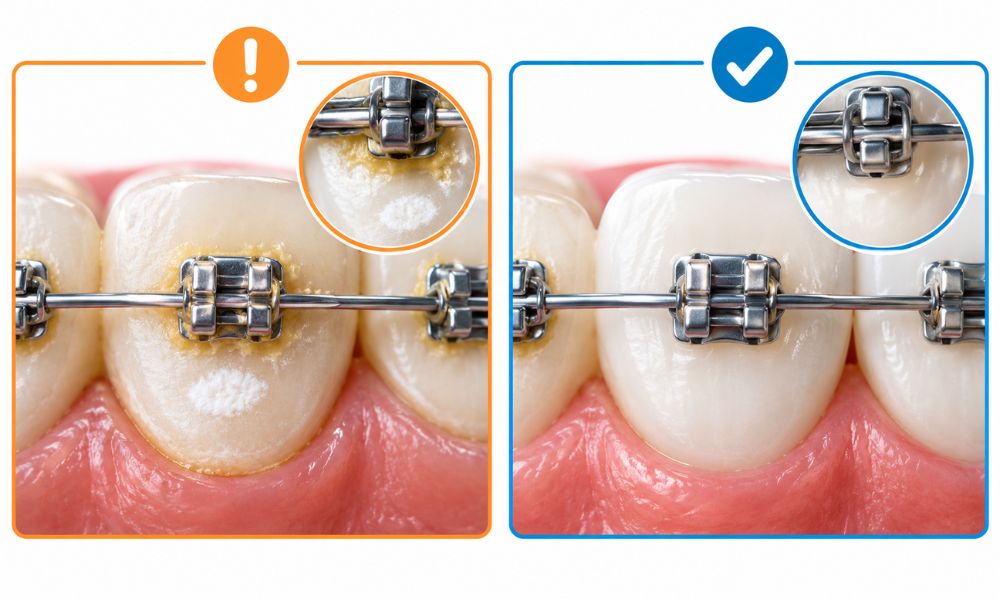
Prevent cavities and white spots by removing plaque consistently, using fluoride toothpaste, cleaning between your teeth every day, and limiting frequent sugary snacks and drinks. White marks around brackets can be an early sign of enamel demineralization, which may become permanent.
Follow these habits throughout orthodontic treatment:
- Brush thoroughly with fluoride toothpaste.
- Clean between your teeth daily using floss or an appropriate flossing tool.
- Use an interdental brush to clean around brackets and wires.
- Drink water regularly, especially after meals and snacks.
- Reduce how often you consume sugary foods and drinks.
- Keep regular dental checkups and professional cleanings.
- Ask your dentist or orthodontist whether a fluoride mouth rinse or other preventive treatment is appropriate for you.
Do not assume that white spots are simply leftover orthodontic adhesive. Changes in enamel can look similar and should be assessed by a dental professional.
Gum health is also important during treatment. If your gums are swollen, bleed frequently, or remain tender, review your brushing and flossing technique with your dental team read what gingivitis is and how to prevent it.
How to Relieve Braces Pain and Soreness

Mild soreness is common for a few days after braces are fitted or adjusted. Softer foods, orthodontic wax, and gentle warm saltwater rinses may help you manage temporary discomfort.
Try these practical steps:
- Choose soft foods: Yogurt, scrambled eggs, pasta, soup, and mashed potatoes require less chewing.
- Use orthodontic wax: If a bracket or wire rubs against your cheek or lips, dry the area gently and apply wax according to the product instructions and your orthodontist’s advice.
- Try a warm saltwater rinse: Dissolve about half a teaspoon of salt in a glass of warm water, rinse gently, and spit it out. Do not swallow the solution.
- Use pain relief only when appropriate: Ask your parent or guardian, pharmacist, dentist, or orthodontist about a suitable over-the-counter pain reliever, especially for children, people with medical conditions, or anyone taking other medicines.
Do not try to bend or cut a wire yourself unless your orthodontic team has specifically instructed you how to manage the situation.
Contact your orthodontist if pain is severe, persists beyond the expected adjustment period, or is accompanied by significant swelling or another concerning symptom.
What Should You Do if a Bracket or Wire Comes Loose?
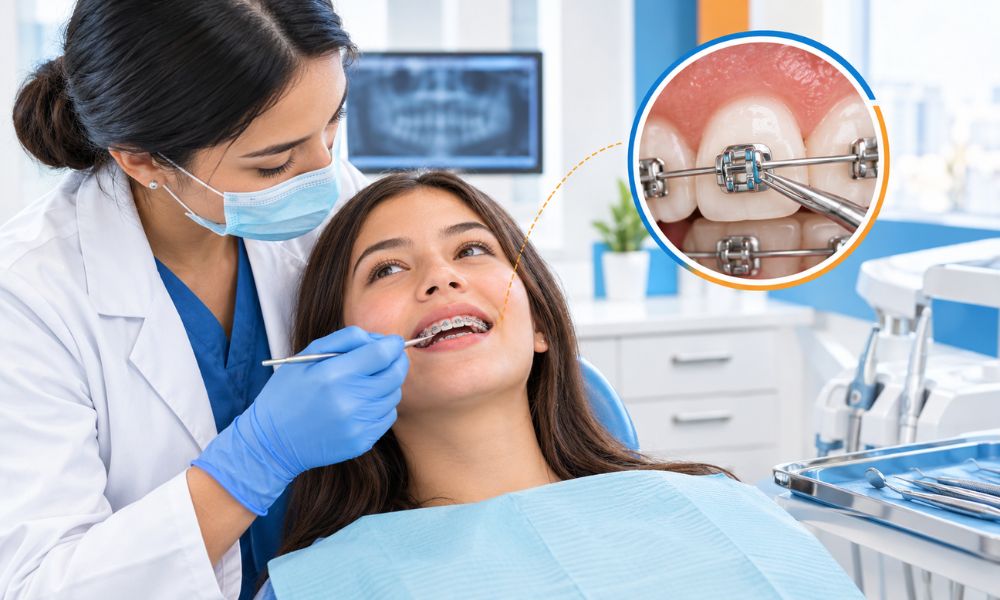
Contact your orthodontist promptly if a bracket becomes loose, a wire breaks, or part of your braces starts causing discomfort. A damaged appliance may interfere with treatment or irritate the inside of your mouth.
While waiting for advice:
- Avoid chewing hard or sticky foods.
- If a wire is rubbing against your cheek, cover the irritating area with orthodontic wax.
- Do not pull at a loose bracket or force a wire back into position.
- Follow your orthodontist’s instructions about whether you need an appointment and how to protect the area.
Seek urgent dental or medical care if you have a serious injury, uncontrolled bleeding, significant facial swelling, or difficulty breathing or swallowing. These symptoms should not wait for a routine orthodontic appointment.
How to Maintain Oral Hygiene With Braces Every Day
The easiest way to maintain oral hygiene with braces is to follow a simple routine in the morning, after meals, and before bed. Keep your cleaning tools accessible so that caring for your braces becomes part of your normal day.
A daily braces care routine
In the morning
- Brush with fluoride toothpaste.
- Check around the brackets and gumline for visible plaque or debris.
- Use any additional product recommended by your dental professional.
After meals and snacks
- Brush when possible.
- If you cannot brush immediately, rinse with water and remove trapped food with a suitable cleaning tool.
- Avoid leaving food caught around the brackets for long periods.
Before bed
- Brush carefully for about two minutes.
- Floss between every tooth.
- Clean around brackets and wires with an interdental brush if needed.
- Use a recommended mouth rinse according to its instructions.
Throughout treatment
- Attend scheduled orthodontic appointments.
- Continue routine dental checkups and professional cleanings.
- Follow instructions for elastics and other appliances.
- Tell your orthodontist about damage, persistent discomfort, or changes in your gums.
Your orthodontist may recommend a different routine depending on your appliance, enamel health, and risk of cavities.
How to Take Care of Clear Aligners and Removable Appliances
Clear aligners and removable orthodontic appliances require different cleaning steps from fixed braces. Remove clear aligners before eating or drinking anything other than plain water, unless your provider has given different instructions for your specific appliance.
For clear aligners:
- Remove them before meals and snacks.
- Brush and floss your teeth before putting them back in whenever possible.
- Clean the aligners as directed by your orthodontist and the manufacturer.
- Avoid hot water that could distort the plastic.
- Store them in their protective case when they are not being worn.
- Follow your prescribed wear schedule.
For retainers and other removable appliances, follow the cleaning method recommended for that device. Some cleaning products are not suitable for every appliance, so check before using household cleaners, hot water, or soaking solutions.
If you are comparing removable aligners with fixed braces, Grinz provides details about clear aligners versus traditional braces and the available clear aligner treatment options.
Frequently Asked Questions About Braces Care
How many times a day should you brush your teeth with braces?
Brush after meals when possible and always before bed. Aim to clean thoroughly for about two minutes each time, using fluoride toothpaste and a soft-bristled toothbrush. If you cannot brush after eating, rinse with water and brush as soon as practical.
How often should you floss with braces?
Floss at least once a day. Use a floss threader, orthodontic floss, or another suitable tool to clean between your teeth and beneath the archwire.
What happens if you do not floss with braces?
Skipping flossing allows plaque and food particles to remain between teeth and near the gumline. Over time, this can contribute to gum inflammation, bad breath, cavities, and enamel changes. Brushing alone does not clean every space between your teeth.
How do you get food out of braces?
Rinse with water first, then use a soft toothbrush or an interdental brush to gently remove food around brackets and wires. Floss can remove particles between teeth. Avoid using pins, toothpicks, or other sharp objects that could injure your gums or damage the appliance.
How do you prevent bad breath with braces?
Brush your teeth and tongue, floss daily, clean around brackets and wires, drink water regularly, and attend dental checkups. Food trapped around braces and plaque buildup can contribute to unpleasant breath. Persistent bad breath should be discussed with a dentist.
Can you get your teeth professionally cleaned while wearing braces?
Yes. Continue routine dental checkups and professional cleanings during orthodontic treatment. Your dentist or hygienist can clean accessible tooth surfaces, assess gum health, and advise whether you need more frequent visits.
What are the do’s and don’ts after getting braces?
Do brush carefully after meals when possible, floss daily, eat soft foods if your teeth feel sore, and attend scheduled orthodontic appointments. Don’t bite into hard foods, chew ice, eat sticky candy, or skip oral hygiene. Follow your orthodontist’s instructions for elastics and other appliances.
How do I maintain my braces?
Maintain your braces by brushing for about two minutes with fluoride toothpaste and a soft-bristled toothbrush, cleaning around brackets and wires, and flossing daily. Choose braces-friendly foods, rinse with water after meals when brushing is not possible, and keep regular dental and orthodontic appointments.
Do braces hurt on the first day?
Braces may cause mild soreness, pressure, or tenderness on the first day as your teeth begin adjusting to the appliance. The discomfort is usually temporary. Eating soft foods, using orthodontic wax for rubbing brackets, and following your orthodontist’s advice can help you feel more comfortable.
Do braces hurt more on day 2 or 3?
For many people, soreness becomes more noticeable during the first two or three days after braces are fitted or adjusted. It usually begins to ease over the following several days. Choose soft foods and avoid chewing hard items while your teeth feel tender. Contact your orthodontist if the pain is severe or does not improve.
Can I eat right away after getting braces?
Yes. You can generally eat after getting braces, but your teeth may feel tender at first. Start with soft foods such as yogurt, scrambled eggs, mashed potatoes, oatmeal, soup, or pasta. Avoid hard, sticky, and crunchy foods that could damage your brackets or wires.
Are Oreos okay for braces?
Oreos are generally easier to eat than hard or sticky candies, but their crunchy cookies can still put pressure on brackets, and crumbs may collect around wires. If you choose to eat them, take small bites, avoid biting forcefully with your front teeth, and brush carefully afterward. Softer foods are a better choice when your teeth are sore.
Will I lose weight when I get braces?
Weight loss is not a guaranteed or intended result of getting braces. Some people temporarily eat less because their teeth feel sore or because they need to avoid certain foods. Choose soft, nutritious meals to maintain adequate nutrition rather than skipping meals. If you experience persistent difficulty eating or unexpected weight loss, speak with a healthcare professional.
Keep Your Smile Healthy Throughout Braces Treatment
Good braces care comes down to consistent cleaning, sensible food choices, and regular professional checkups. Brushing carefully around every bracket, flossing daily, and protecting your appliance can help keep your teeth and gums healthy while orthodontic treatment progresses.
If you are considering braces or need guidance on caring for your current appliance, Grinz Orthodontics offers braces treatment in Tucson. You can request an appointment to discuss your orthodontic needs and receive care instructions suited to your treatment plan.
External references for additional patient-care information:
- American Association of Orthodontists: Oral hygiene tips during orthodontic treatment
- American Association of Orthodontists: Living with braces
- NHS: Braces and how to look after them
- FDA: What to know about traditional braces and clear aligners
This information is for general education and does not replace personalized instructions from your dentist or orthodontist.