
Dental wax for braces helps protect the inside of your cheeks, lips, and tongue from irritation caused by brackets and wires. It creates a smooth barrier over the parts of your braces that rub against your mouth, making everyday activities like talking and eating more comfortable.
If you have recently started wearing braces or noticed a wire rubbing against your cheek, orthodontic wax can provide temporary relief. The key is knowing how to apply it properly, when to replace it, and when an irritating bracket or wire needs attention from your orthodontist.
What Is Dental Wax for Braces?

Dental wax, also known as orthodontic wax or braces wax, is a soft, moldable material designed to cover brackets, wires, and other parts of braces that irritate the soft tissues inside your mouth.
It usually comes in small strips or containers. When you warm a small piece between your fingers, it becomes soft enough to shape around an irritating part of your braces. Once applied, it forms a smooth protective layer that reduces direct friction against your cheeks, lips, and tongue.
Depending on the brand, dental wax may contain beeswax, carnauba wax, paraffin, or other materials. Some products also contain flavoring. Ingredients can vary, so check the packaging if you have allergies or sensitivities.
What does dental wax look like?
Dental wax usually looks like a small, clear, white, or slightly colored strip or piece. It is soft and slightly sticky when warmed between your fingers, making it easy to shape and press over a bracket or wire.
When Should You Use Dental Wax for Braces?
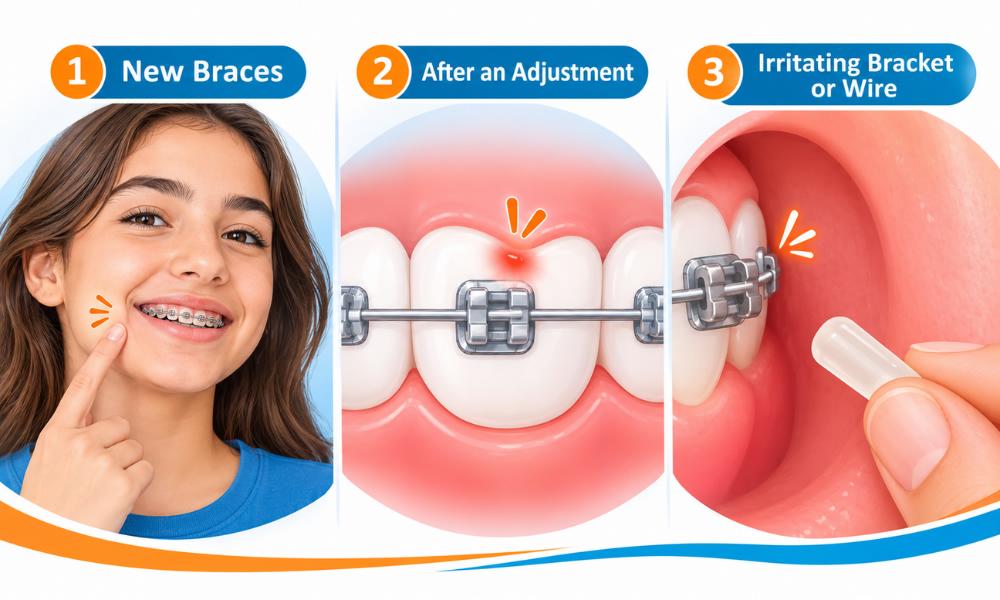
Use dental wax when a bracket, wire, or another part of your braces repeatedly rubs against the inside of your mouth and causes irritation. It is particularly helpful when you are adjusting to new braces or experiencing rubbing after an orthodontic adjustment.
You may find wax useful in these situations:
- When you first get braces: Your cheeks and lips may need time to adjust to the brackets, which can feel rough against the inside of your mouth.
- After an adjustment: Changes to your wires or brackets may create new areas of friction while your mouth gets used to the appliance.
- When a bracket rubs your cheek: A small piece of wax can cover the bracket and create a smoother surface.
- When a wire feels irritating: Wax can temporarily cover the end of a wire that is rubbing against your cheek or tongue while you arrange to have it checked.
- When a sore spot develops: Covering the part of your braces causing friction may help prevent further irritation.Dental wax is intended for temporary comfort. It does not repair broken brackets, reposition wires, or replace an orthodontic adjustment. If something feels loose or damaged, contact your orthodontist.
How to Properly Use Dental Wax on Braces
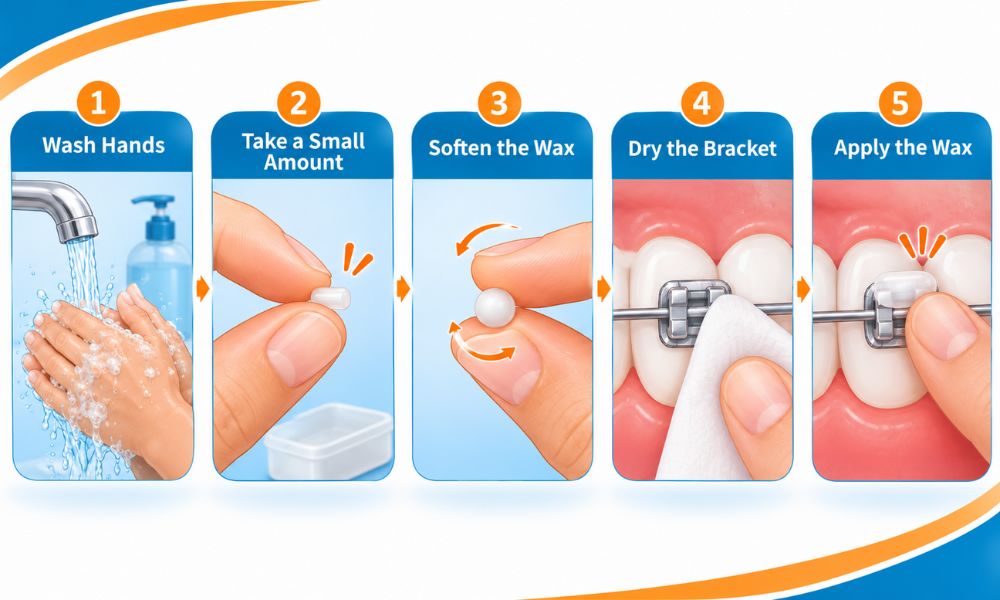
To apply dental wax, clean your teeth, dry the irritated area, soften a small piece of wax, and press it over the bracket or wire, causing discomfort. A dry surface helps the wax stay in place.
Follow these steps:
1. Wash Your Hands
Wash your hands with soap and water before handling the wax. This helps prevent dirt and bacteria from transferring to your mouth.
2. Brush Your Teeth
Brush around your brackets and wires to remove food particles and plaque. If you are replacing old wax, remove it first so you can clean the area properly.
3. Take a Small Piece of Wax
Pinch off a small piece, approximately the size of a pea or just enough to cover the irritating part of your braces. Using too much wax can make it harder to keep in place.
4. Soften the Wax
Roll the piece between your clean fingers until it becomes soft and easy to shape. You can flatten it slightly to make it easier to position over the bracket.
5. Dry the Bracket or Wire
Gently dry the area with a clean tissue or gauze. Dental wax generally sticks better to a dry bracket than to a wet surface.
6. Press the Wax Over the Irritating Area
Place the softened wax directly over the bracket or wire that is rubbing against your mouth. Press it gently into position and smooth the edges so the irritating part is covered.
The wax should form a small, smooth cushion over the area. It should not need to cover large sections of your braces.
If you are unsure where to place the wax or cannot get it to stay in position, ask your orthodontist to show you how.
How Long Do You Leave Wax on Your Braces?
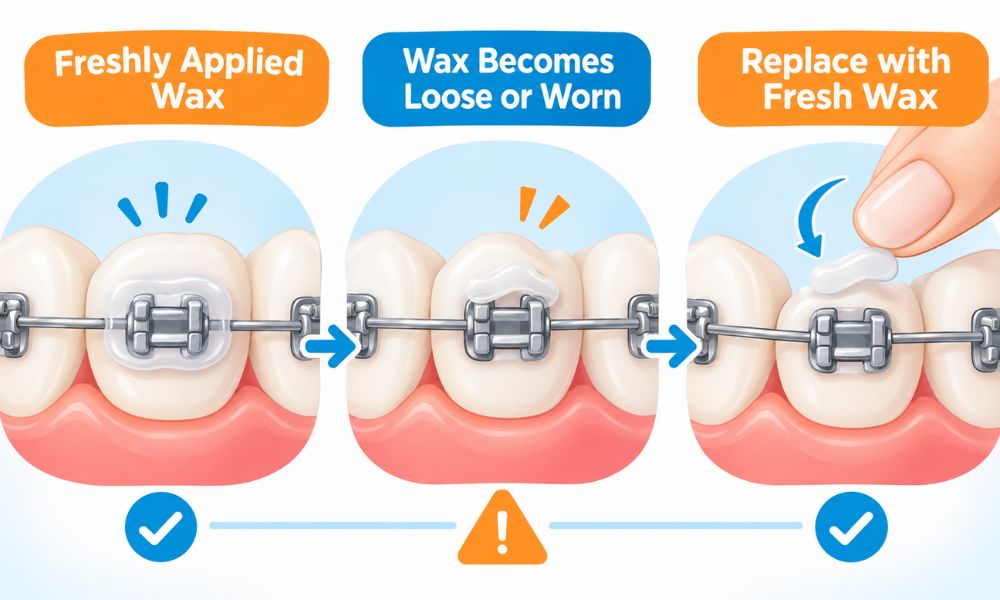
You can generally leave orthodontic wax on your braces until it becomes loose, dirty, worn, or no longer covers the irritating area. There is no single wear time that applies to every product.
Some dental wax products can be worn overnight, but you should follow the instructions on the packaging. Remove the wax when you need to clean your teeth and replace it with a fresh piece if necessary.
Do not keep using the same piece after removing it. Fresh wax is a better choice because used wax may collect food particles and debris.

Can You Eat With Dental Wax on Your Braces?
It is generally best to remove dental wax before eating unless the instructions for your specific product or your orthodontist say otherwise. Chewing can loosen the wax, and food may stick to it or become trapped around your braces.
After eating, brush your teeth or rinse and clean your braces as appropriate. If the same area is still irritating your mouth, apply a fresh piece of wax.
If your orthodontist has given you different instructions for your particular wax, follow their advice.
Can You Sleep With Dental Wax on Your Braces?
Yes, you can generally sleep with dental wax on your braces if the product is intended for oral use and its instructions allow overnight wear.
Before going to bed, make sure the wax is clean and securely covering the irritating bracket or wire. If it comes loose, remove it instead of reusing it.
If you regularly need wax in the same place every night, mention the irritation at your next orthodontic appointment. Your orthodontist may need to check a bracket or wire.
What Happens If You Swallow Dental Wax for Braces?
Accidentally swallowing a small amount of orthodontic wax is generally not harmful. Dental wax is designed for use inside the mouth, and a small piece may occasionally come off while you are wearing it.
However, it is not intended to be eaten. Follow the product instructions and avoid deliberately swallowing it.
If you swallow a bracket, wire, or another hard piece of your braces, that is different from swallowing a little wax. Contact a healthcare professional promptly for advice, especially if you have coughing, choking, breathing difficulty, or trouble swallowing.
How Do You Get Dental Wax to Stick to Braces?
Dental wax sticks better when the bracket or wire is clean and dry. If your wax keeps falling off, the surface may be too wet, the piece may be too large, or it may not have been pressed firmly enough into place.
Try these tips:
- Remove old wax and clean the area first.
- Dry the bracket gently with a clean tissue.
- Use a small piece of wax rather than covering the entire bracket.
- Warm the wax between your fingers before applying it.
- Press it gently over the irritating part and smooth the edges.
If the wax repeatedly falls off or the bracket is moving, contact your orthodontist instead of continuing to reapply it.
Should You Remove Dental Wax Before Brushing?
Yes. Remove dental wax before brushing your teeth so you can clean the brackets, wires, and tooth surfaces properly.
Gently peel the wax away with clean fingers. Brush around the brackets and along the gumline, then check whether the irritated area still needs protection. If it does, dry the bracket and apply a fresh piece.
When applying dental wax, keeping your braces clean is just as important as protecting irritated areas. Follow a consistent brushing and cleaning routine to remove food particles around brackets and wires. Our guide on taking care of your braces and maintaining good oral hygiene during treatment covers the daily habits that help keep your teeth and braces clean.
Does Dental Wax Stick to the Gums?
Dental wax is designed to stick to orthodontic brackets and wires, not directly to your gums. It may touch the gumline when applied near a bracket, but it should be positioned over the part of your braces causing irritation.
If wax repeatedly sticks to your gums or feels uncomfortable, remove it gently and try applying a smaller piece directly to the bracket. Avoid pressing wax into irritated or injured gum tissue.
What Should You Do If You Run Out of Wax for Braces?
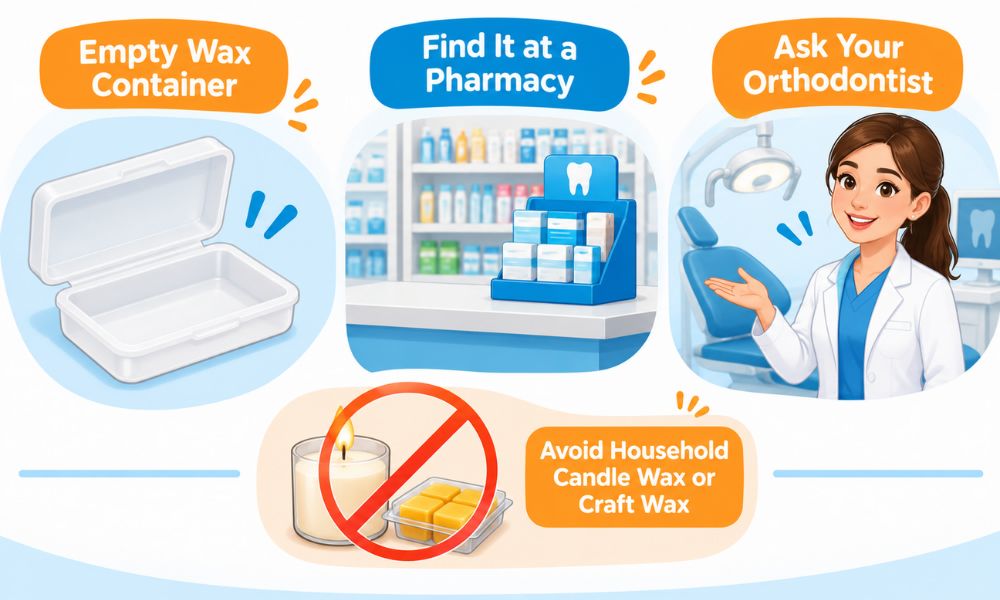
If you run out of dental wax, contact your orthodontist or look for orthodontic wax at a pharmacy. Many pharmacies carry products specifically made for braces.
Avoid substituting candle wax, craft wax, or other household materials. These products are not designed for use in your mouth.
If a wire or bracket is causing significant irritation and you cannot get wax, contact your orthodontist for advice. Do not cut, bend, or try to repair the braces yourself.
When Is Dental Wax Not Enough?
Dental wax can make minor irritation more manageable, but it cannot fix a damaged orthodontic appliance. If a wire continues to poke your cheek, a bracket becomes loose, or a sore keeps getting worse, your orthodontist should check the problem.
Contact your orthodontist if you notice:
- A wire that keeps poking or cutting your cheek.
- A loose or broken bracket.
- A wire that has shifted out of position.
- A sore that continues to worsen or does not improve.
- Swelling, unusual bleeding, pus, or other possible signs of infection.
- Severe or persistent discomfort.
Dental wax can temporarily protect your mouth from a poking wire, but it cannot repair a damaged orthodontic appliance. If a wire becomes loose, a bracket breaks, or irritation continues, contact your orthodontist. The American Association of Orthodontists’ advice on handling orthodontic emergencies explains which braces-related problems may need professional attention.
Keep Your Braces Comfortable With the Right Care
Dental wax is a simple way to protect your cheeks and lips when brackets or wires cause minor irritation. Keep a small supply available, apply it to clean and dry braces, and replace it when it becomes loose or dirty. Most importantly, do not use wax as a substitute for having a damaged or uncomfortable appliance checked.
Along with using dental wax when needed, choosing the right foods can help prevent unnecessary irritation and damage to your braces. Hard, sticky, and chewy foods can put extra pressure on brackets and wires. Learn which foods to avoid and what you can eat comfortably with braces to make everyday meals easier during orthodontic treatment.
Wearing braces comes with a few adjustments, but having the right guidance can make the experience easier. At Grinz Orthodontics in Tucson, we help children, teens, and adults navigate their orthodontic treatment with personalized care and support. If a bracket or wire is causing ongoing discomfort, contact our team so we can help you understand the next steps toward a more comfortable braces experience.
Frequently Asked Questions About Dental Wax for Braces
1. How long should I leave dental wax on my braces?
You can leave dental wax on your braces until it becomes loose, dirty, or starts wearing away. Replace it as needed, generally within 24–48 hours. Always remove old wax before applying a fresh piece, especially if food particles become trapped underneath.
2. Can I eat with dental wax on my braces?
It is best to remove dental wax before eating. Chewing can loosen the wax, and food particles may get trapped underneath it. After your meal, brush your teeth, dry the affected bracket, and apply a fresh piece if irritation continues.
3. Can you sleep with dental wax on your braces?
Yes. You can sleep with orthodontic wax on your braces. It can help protect your cheeks and lips from rubbing against brackets or wires while you sleep. Make sure the wax is securely applied and follow your orthodontist’s instructions.
4. When should I use dental wax for braces?
Use dental wax whenever brackets, hooks, or protruding wires rub against your cheeks, lips, or tongue and cause irritation. It is particularly helpful during the first few weeks after getting braces or following an adjustment. However, contact your orthodontist if a wire or bracket is broken or continues to cause discomfort.
5. Can you drink water with wax on your braces?
Yes. Drinking plain water with dental wax on your braces is generally fine. However, avoid hot beverages that may soften the wax or cause it to loosen. If the wax shifts or falls off, replace it with a fresh piece when needed.
6. What happens if I accidentally swallow dental wax for braces?
Accidentally swallowing a small amount of orthodontic wax is generally harmless. Dental wax is made from non-toxic materials such as beeswax, carnauba wax, or paraffin. Small pieces typically pass through the digestive system without causing problems. If you swallow a large amount or experience unusual symptoms, seek medical advice.
7. Can I brush my teeth with dental wax on my braces?
It is best to remove dental wax before brushing your teeth. This allows you to clean around the brackets and wires properly without leaving food particles or plaque underneath the wax. After brushing, dry the affected area and apply a fresh piece if needed.
8. How long can you keep braces wax in your mouth?
You can generally keep orthodontic wax in place for up to 24–48 hours, but replace it sooner if it becomes dirty, loose, or worn out. Never reuse old wax. Keeping the area clean helps prevent food debris from becoming trapped around your braces.